

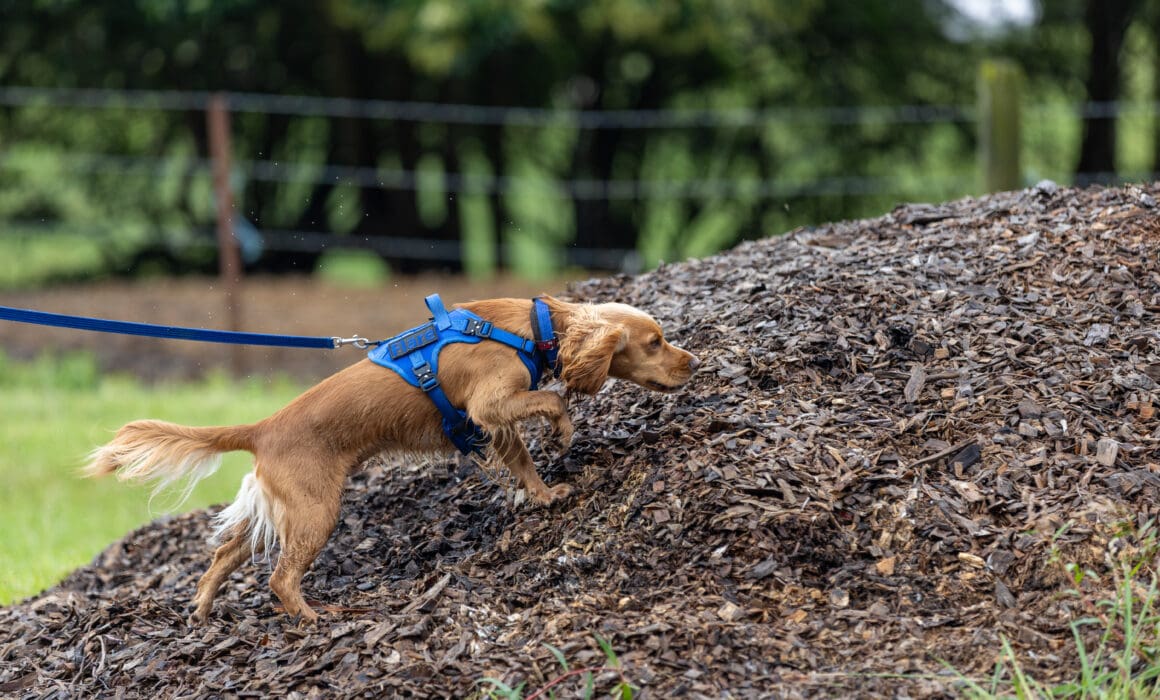
When Helping Gets in the Way: Are We Giving Our Dogs Enough Time to Search?
When Helping Gets in the Way: Are We Giving Our Dogs Enough Time to Search?
Sometimes the best thing we can do for our dogs is give them the space to work things out for themselves.
As handlers, we want our dogs to succeed. We want them to find the hide, solve the problem and enjoy the search. And when we see them struggling, it’s only natural to want to help. We might move a little closer to the hide, encourage them to check an area again, point them in a particular direction or offer a reassuring word. It all comes from a good place.
But here’s something worth considering: Are we sometimes helping our dogs when they don’t actually need our help?
And more importantly, what might we be interrupting when we do?
Is Your Dog Struggling, or Just Thinking?
One of the most interesting things about Nose Work is watching dogs process information. A dog might catch a little odour, move away, circle back, investigate something else and then return to the original area. To us, it can look like they’re confused, distracted or losing focus. But perhaps they’re doing exactly what they need to do.
They’re gathering information. They’re working through the scent picture, investigating where odour is available and trying to determine where it’s coming from. This process doesn’t always look neat or efficient. Sometimes it takes time. Sometimes the dog needs to explore several possibilities before finding the answer.
Just because a dog hasn’t found the hide yet doesn’t mean they aren’t working.
When we intervene too quickly, we risk interrupting that process before the dog has had the opportunity to solve the problem.
When Help Becomes a Habit
Imagine a dog working through a challenging search. They encounter a problem, pause for a moment and look towards their handler. The handler responds by moving towards the hide or encouraging the dog in the right direction. The dog finds the hide and gets rewarded.
Success!
Or is it?
The dog may have learned something slightly different from what we intended. Instead of learning to persist and solve the problem independently, they may have learned that when things become difficult, looking to their handler produces useful information.
Now imagine that happening repeatedly.
Over time, the dog might begin checking in with the handler earlier and more frequently, rather than continuing to investigate the search area. And the handler, seeing the dog look towards them, feels the need to offer more assistance. Without realising it, we’ve created a pattern where the dog and handler become increasingly dependent on each other to solve the search. That’s not necessarily the partnership we’re trying to build.
The Value of Independent Hunting
One of the things I love most about Nose Work is watching a dog become completely absorbed in the hunt. That wonderful moment when the dog is driving the search, making decisions, investigating possibilities and working things out without needing constant direction. There’s something special about watching a dog solve a difficult problem independently.
It’s not just about finding the hide.
It’s about the experience of getting there.
When dogs have opportunities to work through appropriately challenging problems, they can develop persistence, confidence and a greater willingness to keep searching when the answer isn’t immediately obvious. And when they finally solve that problem? The reward isn’t just the food or toy at the end. There’s also the satisfaction and enjoyment of the hunt itself.
We want dogs who love searching, not simply dogs who have learned to follow our instructions to the hide.
What About Rewarding Effort?
This is where things become interesting. There are certainly times when rewarding effort during a challenging search can be useful. Perhaps a dog is working through a particularly difficult scent picture, showing persistence and continuing to hunt independently. In that situation, acknowledging their effort may help maintain motivation and reinforce the behaviour we want to see. But we need to consider what we’re actually rewarding.
Is the dog actively hunting, investigating and trying to solve the problem? Or have they stopped searching, turned towards us and started looking for assistance?
Those are two very different situations. If we consistently reward dogs when they disengage from the search and look to us, we may inadvertently strengthen the very behaviour we’re trying to avoid. The key is learning to recognise the difference between a dog who is working through a challenge and a dog who is asking the handler to take over. And that takes observation, experience and practice.
Sometimes the Best Help Happens Before the Search
Of course, none of this means we should leave dogs struggling endlessly or expect them to solve problems they’re not ready for. Good training involves setting dogs up for success. That means considering the difficulty of the hide, the environment, the dog’s experience and what we’re hoping they’ll learn from the exercise. If a dog repeatedly needs assistance to complete a search, perhaps the question shouldn’t be, “How can I help them find this hide?”
Perhaps it should be, “How could I set up this search differently so they can solve it themselves?”
We can adjust the difficulty, simplify the scent picture, change the environment or revisit foundation exercises. Sometimes the most effective way to help a dog become more independent is to make the next training problem a little easier. That isn’t going backwards. It’s building the skills and confidence needed to move forward.
Giving Our Dogs Permission to Work Things Out
Think back to those early foundation searches. For many dogs, the first few weeks of Nose Work involve very little handler direction. We allow the dog to explore, investigate and discover that searching is rewarding. We don’t need to show them where to go or tell them how to solve the problem. We give them an opportunity, and they begin to work it out. As dogs progress to more complicated searches, it’s easy for us to become increasingly involved. We have more knowledge, more expectations and perhaps more concern about getting the search right. But the independence we encouraged in those early weeks is just as valuable at the higher levels. Perhaps even more so.
Our challenge as handlers is to resist the temptation to become the problem-solver when our dogs are perfectly capable of doing the job themselves.
When Should We Step In?
There will always be situations where intervention is appropriate. A dog may be genuinely overwhelmed, frustrated, physically uncomfortable or working on a problem that is simply beyond their current skill level. And sometimes we need to make a decision to end the search, simplify the task or offer support. The important thing is that we’re making that decision based on what the dog is telling us, rather than our own discomfort with waiting.
It’s worth asking ourselves:
- Is my dog still actively searching?
- Are they investigating and making decisions?
- Are they showing persistence, even if they haven’t found the answer?
- Am I about to intervene because my dog needs help, or because I want the search to move along?
Sometimes the answer will be to help. Sometimes it will be to make the next search easier. And sometimes the best decision will be to stand quietly and give the dog another moment.
Finding the Joy in the Search
At the end of the day, Nose Work is about so much more than locating a hide. It’s about giving our dogs an opportunity to use their incredible noses, make choices, solve problems and enjoy doing something they’re naturally equipped to do. As handlers, our role isn’t always to provide the answer. Sometimes it’s to create the right opportunities, observe carefully and trust our dogs to work things out. The next time your dog pauses during a search, resist the urge to immediately fill that silence with direction.
Watch.
Wait.
Give them a little space.
You might be surprised by what happens when you let your dog do the thinking.
Because sometimes, the best way to help our dogs is to help a little less.
Happy Sniffing!
Lesia Burford, CNWI™
K9 Nose Time